
The Potlatch Ban
For decades, the government outlawed all potlatches

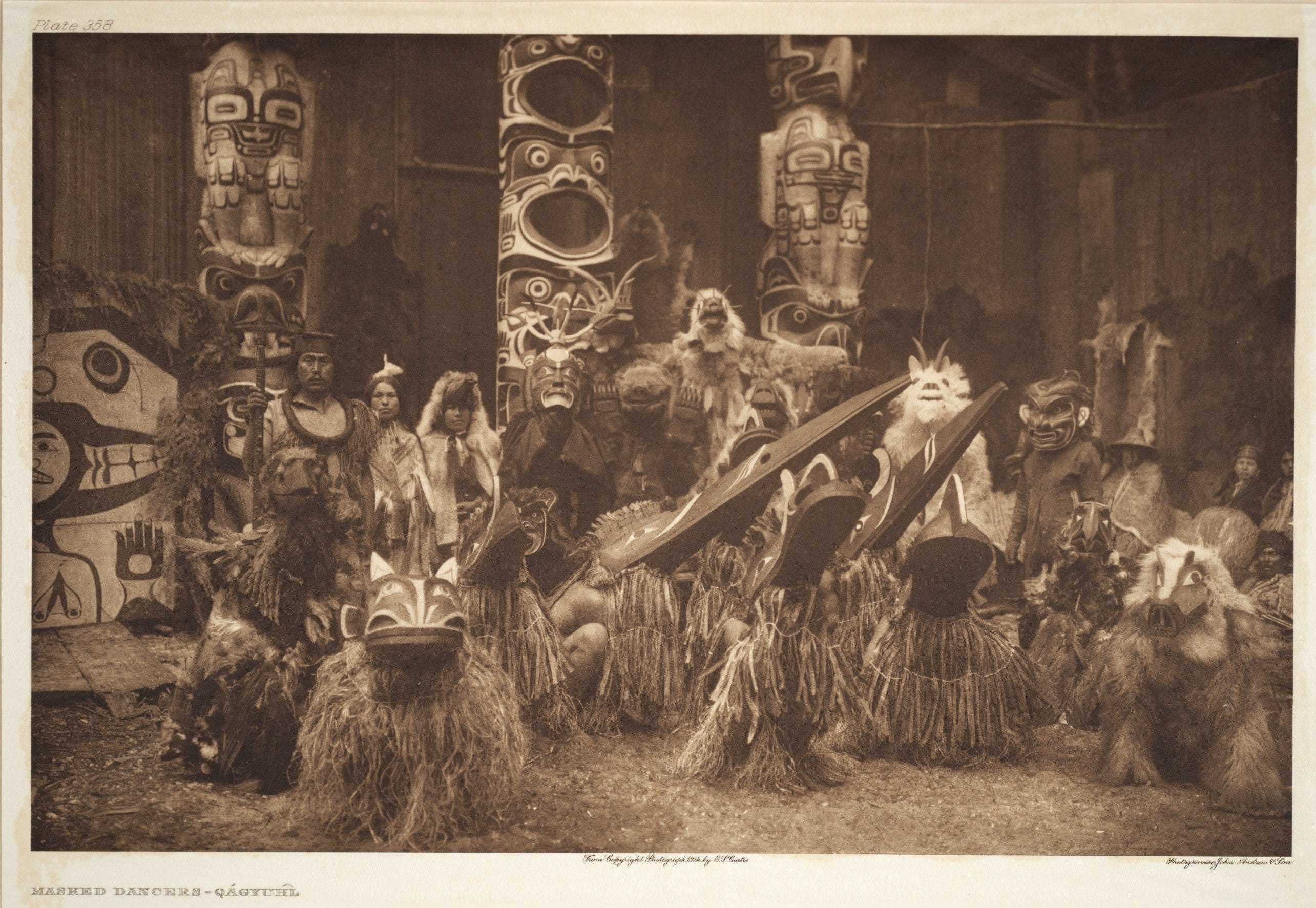
Among many Indigenous Nations of the Northwest Coast, potlatches are deeply meaningful public ceremonies that validate major life events, responsibilities, relationships, titles, and histories.
They are governance systems carried out through ritualized speeches, gift-giving, song, dance, and community presence. The “giving” of wealth isn’t random generosity. It’s a way of redistributing resources, maintaining reciprocal obligations, and publicly confirming rights and status. These gatherings are also how families and communities witness and affirm new names, marriages, births, memorials, adop- tions, and the transfer of hereditary titles.
All of this happens in a potlatch.
For many settlers, missionaries, and Canadian government officials in the late 1800s, potlatches looked chaotic, pagan, economically irrational, and threatening to their sense of order. An outsider who didn’t understand the cultural framework could look at a potlatch and see only dancing, gift-giving, masks, and feasting—elements that were foreign to Victorian Christian norms. But potlatches weren’t simply cultural celebrations. They were statements of law, history, identity, and community order. When a community witnessed someone being given a name or title at a potlatch, that was a public, collective act of recognition with real consequences in how that society operated.
